

We have a passion for unconventional solutions that bring your vision to life.
A core test for the key rooms of a Biosafety Level 3 (BSL-3) laboratory is the enclosure airtightness test.During the test, the room is drawn into a negative pressure state, and then the pressure recovery rate is monitored. If air leakage occurs too quickly, all subsequent experiments must be halted—and doors are among the most common culprits for such leaks.This test is governed by two national standards: Code for Design and Construction of Biosafety Laboratories (GB 50346—2011) and General Requirements for Biosafety in Laboratories (GB 19489-2008).Both standards explicitly mandate airtightness testing for the enclosures of protection zones in BSL-3 and Biosafety Level 4 (BSL-4) laboratories, with the pressure decay method (also referred to as the pressure recovery method) and the constant pressure method being the most widely adopted techniques.For instance, Clause 6.4.8 of General Requirements for Biosafety in Laboratories (applicable to BSL-4 laboratories) stipulates: "The airtightness of the enclosure of the laboratory protection zone shall meet the following requirement: when all accesses to the tested room are closed and the indoor temperature is maintained at the upper limit of the design range, the natural pressure decay within 20 minutes shall be less than 250 Pa after the indoor air pressure is raised to 500 Pa."Precisely because doors are a major hotbed for air leakage, the installation of airtight doors has become one of the most technically demanding steps in the construction of BSL-3 and BSL-4 laboratories.Unlike ordinary doors, airtight doors must not only fulfill the basic function of daily opening and closing but also maintain an airtight seal for long periods under high negative pressure conditions.This article breaks down the critical considerations for airtight door installation from seven key aspects: installation preparation, connection and fixation, structural selection, adjustable mechanisms, installation space planning, sealing treatment, and testing and acceptance.
The material of the supporting wall is a decisive factor.Airtight doors are inherently heavy—a single stainless steel door with its frame typically weighs over 100 kilograms. Compounded by the pressure differentials inside the laboratory, significant force is exerted on the door leaf each time it is opened or closed.Standards recommend fixing airtight doors directly to concrete walls. Concrete walls boast excellent structural integrity, enabling them to stably bear the weight of the door and the impact forces from its operation. The most reliable construction practice is to pre-reserve a door opening during the concrete pouring phase, fix the door frame to the concrete wall via bolting or welding after installation, and then conduct professional sealing treatment.However, if the laboratory uses lightweight enclosures such as clean color steel panels, special reinforcement measures are a must. Color steel panels have limited structural strength; direct door installation will likely cause deformation of the panels around the frame over time, which irreparably damages the airtight seal. In such cases, reinforcing components must be pre-embedded in the enclosure—for example, installing a steel sub-frame first, then mounting the airtight door on this reinforced structure. Poor execution of this step will almost certainly lead to persistent air leakage in later use.
Standards explicitly recommend an integral welded structure for the door leaf and frame of airtight doors, and this recommendation is backed by solid engineering logic.Spliced structures are assembled from multiple components, with sealant applied at all joints. Laboratories regularly use strong disinfectants such as hydrogen peroxide and peracetic acid for fumigation; prolonged exposure to these chemicals causes sealant to age and crack rapidly. Once the sealant fails, air seeps through the joints unimpeded.In contrast, integral welded structures are prefabricated in factories, with the door frame and leaf skeleton forming a single, rigid unit with no spliced joints. Only the gaps between the door frame and the wall need to be sealed during on-site installation. This design reduces on-site sealing work and significantly enhances the reliability of the door's airtight performance.
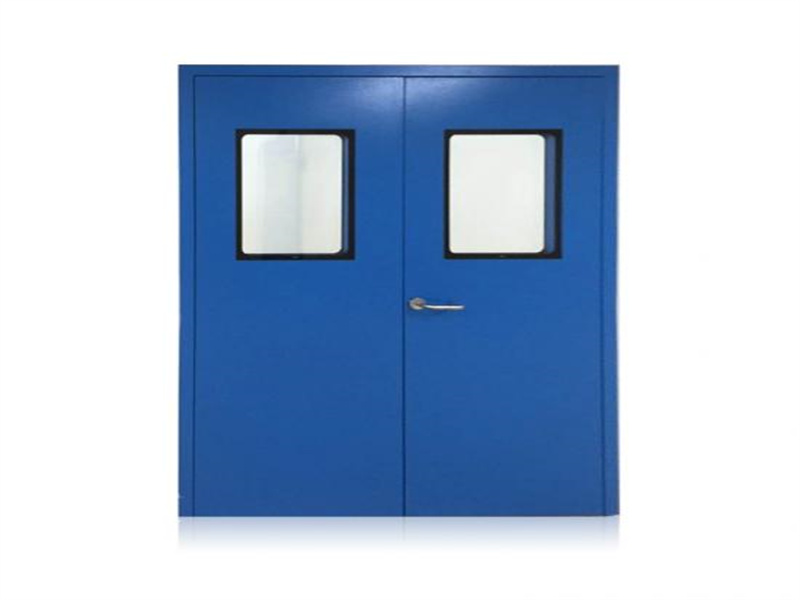
Construction site tolerances are unavoidable—door opening dimensions and wall verticality can never be perfectly precise. After installation, airtight doors may develop uneven gaps between the leaf and frame: overly large gaps prevent the sealing strip from being compressed tightly, while excessively small gaps make opening and closing the door extremely difficult.This is where adjustable hinges prove invaluable. By adjusting the position of the hinges, the door leaf can be fine-tuned within the frame to ensure uniform gaps around its entire perimeter. Adjustable latches, on the other hand, regulate the clamping force when the door is closed, ensuring the sealing strip is compressed to an optimal degree—achieving a perfect airtight seal without causing operational difficulties due to over-compression.These two adjustable components offer an additional long-term benefit: after several years of use, sealing strips undergo a certain degree of compressive deformation, and the clearances of hinges and latches shift slightly. Instead of replacing the entire door, simply readjusting these components restores the door's airtight performance to factory standards.
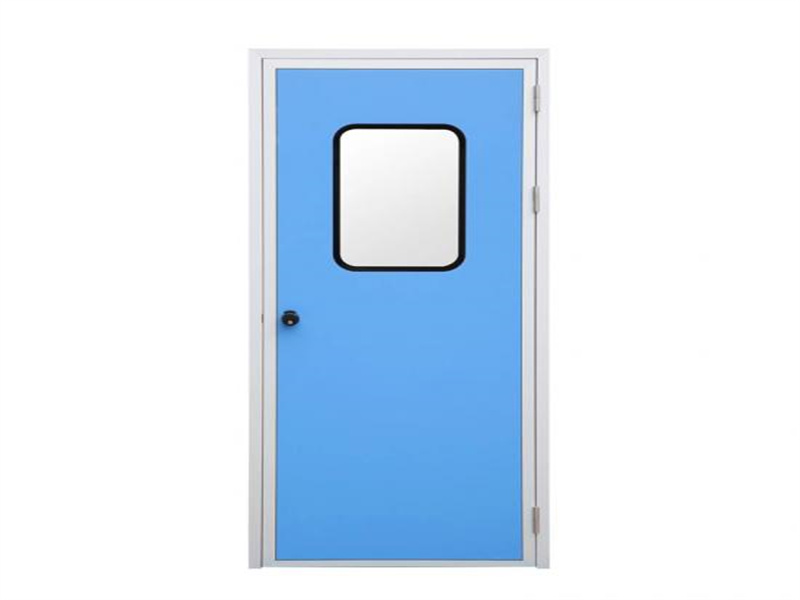
Sufficient operating space must be reserved for subsequent testing.Leakage detection is a mandatory step after airtight door installation. Inspectors need to insert instrument probes around the door frame or scan both sides of the door with an ultrasonic generator. If the door frame is too close to adjacent walls, instruments cannot be maneuvered into place, making detection impossible.To address this, standards stipulate that the distance between the two sides and top of the airtight door and the surrounding enclosure shall not be less than 200 millimeters. This figure is not arbitrary—it is carefully calibrated to provide ample operating space for inspectors. Neglecting this requirement in the design phase will result in costly and time-consuming modifications if insufficient space is discovered after the door is installed.
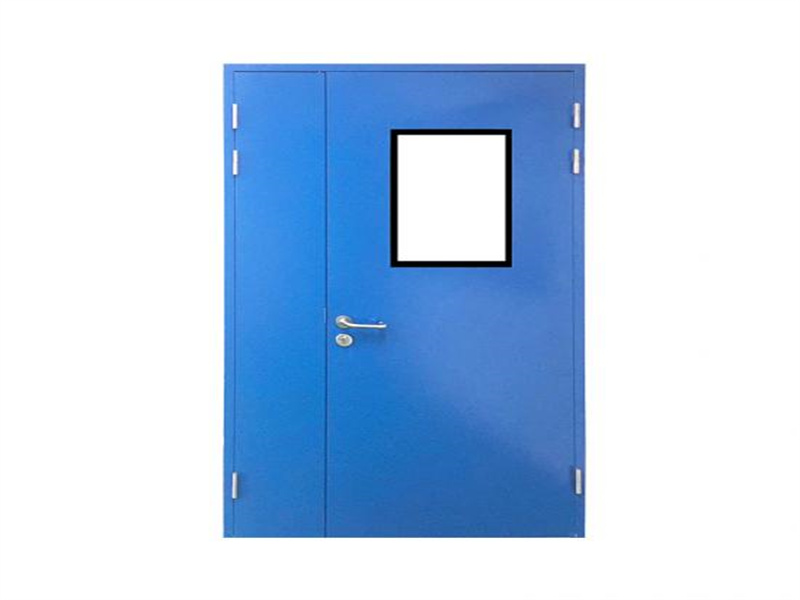
The ultimate goal is to seal every potential air leakage point.Airtight doors rely primarily on sealing strips for their airtight performance. When the door is closed, the sealing strip is compressed to fill the gap between the door leaf and frame, creating a perfect seal.Two types of sealing strips are commonly used today: rubber sealing strips and inflatable sealing strips. Inflatable sealing strips are typically used in higher-grade laboratories—they inflate to form an airtight seal after the door is closed and deflate to release pressure before the door is opened. While they offer a higher sealing grade, they require supporting air supply and control systems, resulting in a more complex structure and higher costs.The gaps between the door frame and the wall also require meticulous treatment. Several millimeters to one or two centimeters of installation gaps are left around the door frame during installation, and these gaps must be fully filled with flexible sealing materials. Additionally, openings for wall-penetrating pipelines and nail holes for fasteners must not be overlooked and must be sealed as well.The selection of sealing materials is also critical. Only flexible, anti-aging materials should be used—materials that can adapt to minor structural deformations during long-term use and resist corrosion from the chemical disinfectants commonly used in laboratories. Choosing corrosion-intolerant materials will lead to cracking within a few years, requiring time-consuming and labor-intensive repairs.
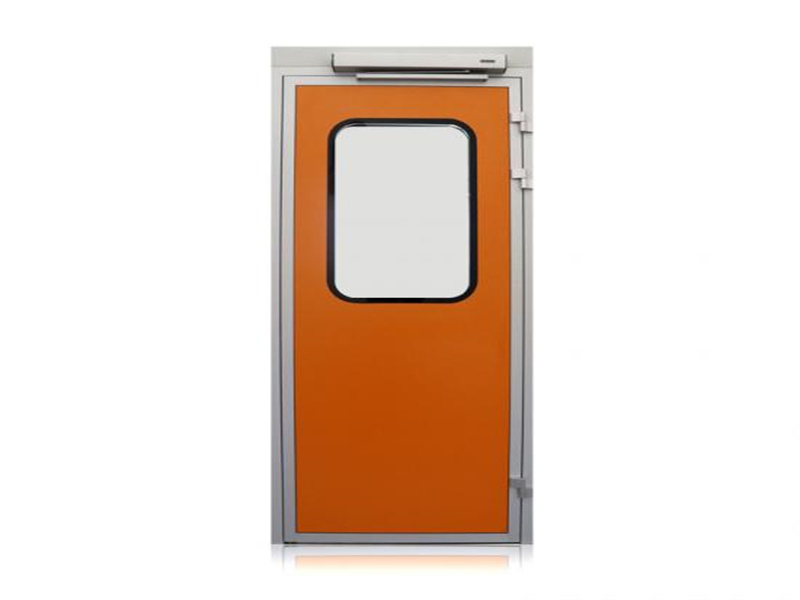
After installation, the airtight door must undergo enclosure airtightness testing alongside the entire laboratory enclosure system.The pressure decay method is the most commonly used test: a fan is used to draw the room into a specified negative pressure state, then the fan is turned off, and the pressure recovery amplitude per unit time is measured. A slower pressure recovery rate indicates better overall airtightness. It is important to note that pressure recovery can stem from either enclosure leakage or leakage in the testing system itself; in engineering practice, the impact of system leakage must be eliminated first to accurately evaluate the enclosure's airtightness.For the airtight door itself, local detection methods such as the trace gas method or ultrasonic transmission method can be used to accurately locate any leakage points. The test results must fully comply with the requirements of relevant national standards to pass acceptance.If leakage is detected during testing, the leakage points must be identified and repaired immediately—this process may need to be repeated multiple times until the airtightness requirements are met. This is the most rigorous test of construction quality in the entire airtight door installation process.
Code for Design and Construction of Biosafety Laboratories includes another important provision: no access hatches shall be installed on the ceilings of protection zones in BSL-3 and BSL-4 laboratories.It is important to note that the "protection zones" here refer to areas with strict airtightness requirements, such as core workrooms and buffer rooms—not all rooms in the laboratory.What does this regulation have to do with airtight doors?Airtightness is extremely difficult to guarantee for openings such as manholes and pipeline access hatches. If an access hatch is installed on the ceiling of the room where an airtight door is located, even the most well-constructed airtight door will be rendered ineffective by this "skylight" leakage point.Therefore, the installation of an airtight door is not an isolated task. It is closely intertwined with wall materials, ceiling design, testing space planning, and sealing material selection. A single flawed link in this process can compromise the overall airtightness of the entire laboratory.

Wiskind Cleanroom specializes in cleanroom enclosure system , ceiling system, cleanroom doors and windows and related product development, manufacturing, sales, consulting and services.

 Chinese
 English
 Russian
 French
 Spanish
 Portuguese
 Arabic
 Korean
 German
 Japanese
 Thai
Thai Hindi
Hindi