

In cleanroom environments, maintaining strict control over airborne particles, temperature, humidity, and pressure is essential to ensure product quality and regulatory compliance. Among the many components that contribute to cleanroom performance, air vents play a vital role in delivering clean air efficiently and maintaining a controlled environment.Whether in pharmaceutical manufacturing, biotechnology laboratories, semiconductor facilities, medical device production, or food processing plants, properly designed air vent systems are fundamental to achieving the required cleanliness classification.
We have a passion for unconventional solutions that bring your vision to life.
In cleanroom environments, maintaining strict control over airborne particles, temperature, humidity, and pressure is essential to ensure product quality and regulatory compliance. Among the many components that contribute to cleanroom performance, air vents play a vital role in delivering clean air efficiently and maintaining a controlled environment.
Whether in pharmaceutical manufacturing, biotechnology laboratories, semiconductor facilities, medical device production, or food processing plants, properly designed air vent systems are fundamental to achieving the required cleanliness classification.
Cleanroom air vents are specialized air distribution and return components integrated into the HVAC system. Their primary function is to distribute filtered air uniformly throughout the cleanroom while removing contaminated air from the controlled space.
Typically, cleanroom air vents work in conjunction with HEPA or ULPA filtration systems to ensure that only highly purified air enters the controlled environment.
Properly designed air vents help create a consistent airflow pattern across the cleanroom. Uniform airflow minimizes turbulence and prevents the accumulation of airborne particles in critical production areas.
Air vents support contamination control by directing clean air toward critical work zones and removing particles generated by personnel, equipment, and manufacturing processes.
Many cleanrooms require positive or negative pressure differentials between adjacent spaces. Air vent systems help maintain these pressure relationships, preventing cross-contamination between rooms.
Air vents distribute conditioned air evenly, ensuring stable temperature and humidity levels throughout the cleanroom. This is especially important for sensitive manufacturing processes and product stability.
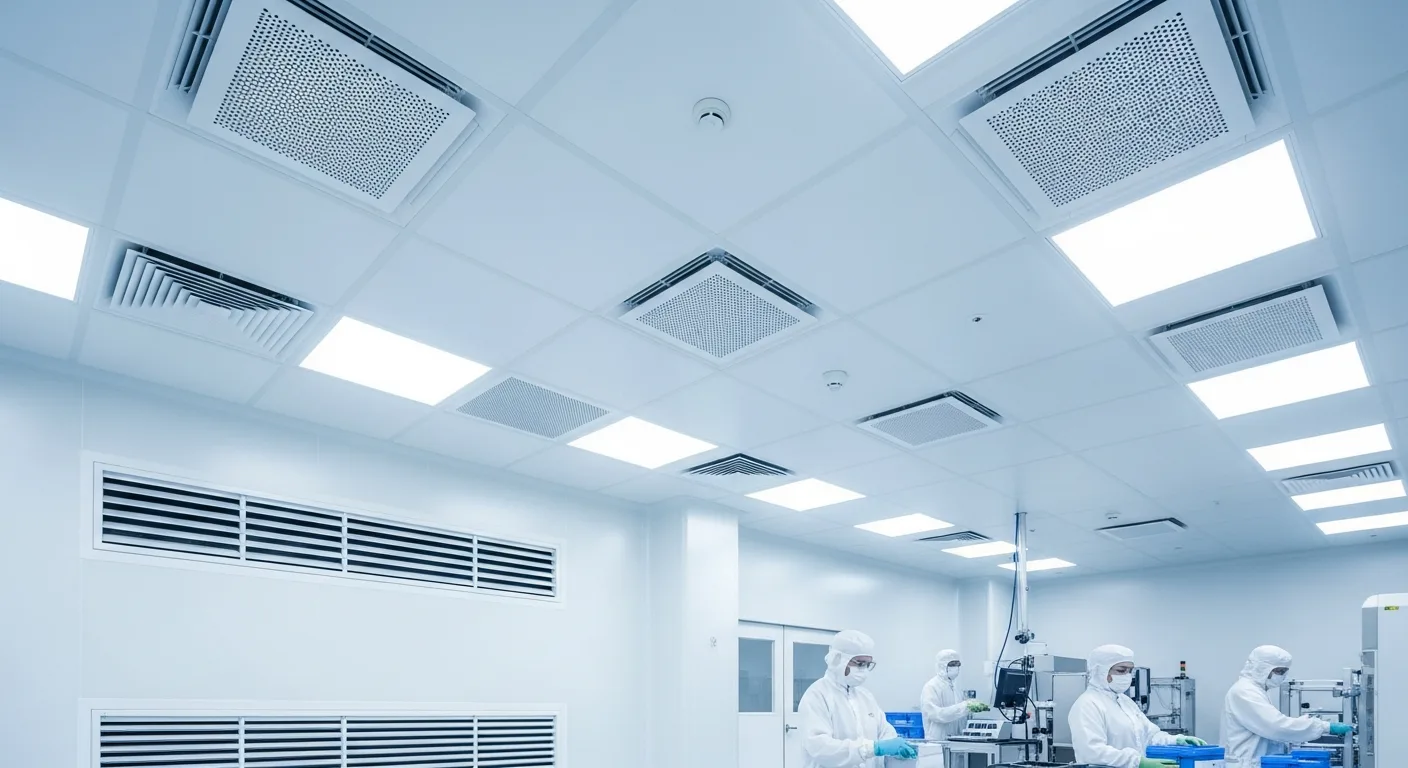
Supply air vents introduce HEPA- or ULPA-filtered air into the cleanroom. They are often installed in ceilings and designed to deliver laminar or non-unidirectional airflow based on cleanroom requirements.
Return air vents collect and remove air from the cleanroom, directing it back to the HVAC system for filtration and recirculation. Their placement significantly affects airflow patterns and cleanliness performance.
Exhaust vents are used in applications where contaminants, chemicals, or hazardous substances must be removed from the environment. These systems are common in pharmaceutical, chemical, and biotechnology facilities.
To meet stringent hygiene and cleanliness standards, cleanroom air vents are typically manufactured from:
Powder-coated steel
Stainless steel (304 or 316L)
Anodized aluminum
These materials provide:
Corrosion resistance
Smooth, easy-to-clean surfaces
Low particle generation
Long service life
When selecting or designing air vents for cleanroom applications, several factors should be considered:
Cleanroom classification (ISO 14644 or GMP requirements)
Air change rate requirements
Airflow velocity
Pressure differential requirements
HVAC system compatibility
Ease of maintenance and cleaning
Energy efficiency objectives
A well-designed air vent system not only improves contamination control but also reduces operating costs by optimizing airflow performance.
Organizations can achieve significant advantages through properly engineered air vent solutions:
✓ Enhanced contamination control
✓ Improved cleanroom compliance
✓ Stable environmental conditions
✓ Increased product quality and yield
✓ Reduced maintenance requirements
✓ Better energy efficiency
✓ Longer HVAC system lifespan
Air vents are far more than simple air distribution components—they are essential elements of a cleanroom's contamination control strategy. By ensuring proper airflow, pressure management, and environmental stability, high-quality air vent systems help cleanrooms maintain regulatory compliance and operational excellence.
As cleanroom standards continue to evolve across pharmaceutical, biotechnology, semiconductor, and healthcare industries, investing in advanced air vent solutions remains a critical step toward achieving reliable, efficient, and sustainable cleanroom performance.
We will contact you as soon as possible!
The Critical Role of Air Vents in Cleanroom Environments

Wiskind Cleanroom specializes in cleanroom enclosure system , ceiling system, cleanroom doors and windows and related product development, manufacturing, sales, consulting and services.

 Chinese
 English
 Russian
 French
 Spanish
 Portuguese
 Arabic
 Korean
 German
 Japanese
 Thai
Thai Hindi
Hindi