

We have a passion for unconventional solutions that bring your vision to life.
A practical 2026 article draft with internal links for Wiskind Cleanroom
Cleanroom standards define how clean the air must be inside a controlled environment. The most widely used system is ISO 14644-1, which classifies cleanrooms from ISO Class 1 to ISO Class 9 based on airborne particle concentration. For sterile pharmaceutical manufacturing, ISO classification is usually combined with GMP Grades A, B, C, and D, which look beyond particle count to the full contamination control strategy.
For most project teams, the practical answer is simple: use ISO 14644 to define the particle cleanliness level, use GMP to define sterile manufacturing expectations, and translate old FS 209E terms such as Class 100 or Class 10,000 into modern ISO language. Wiskind's cleanroom product categories can then be matched to the classification, process flow, and industry risk level.
Standard | Best Used For | Main Focus |
ISO 14644-1 | Most cleanroom industries | Airborne particle limits and cleanroom classification |
EU GMP Grades A-D | Sterile pharmaceutical manufacturing | Contamination control during real production |
FDA CGMP guidance | U.S. sterile drug manufacturing | Aseptic processing, facility qualification, and monitoring |
FS 209E | Legacy project references | Older Class 100, Class 1,000, and Class 10,000 terminology |
A cleanroom is not just a room with filtered air. It is a controlled system designed to reduce contamination from people, materials, equipment, airflow, surfaces, and the surrounding environment. That matters because a small contamination event can affect product safety, production yield, regulatory compliance, or long-term operating cost.
The right standard helps answer three practical questions: how clean the air needs to be, how the cleanroom should be designed and operated, and how the room will be tested, monitored, and validated. For facilities that need faster construction or future expansion, a modular cleanroom can make these decisions easier to implement because wall, ceiling, door, window, and equipment interfaces can be planned as one coordinated system.
ISO 14644-1 classifies cleanrooms by the maximum number of airborne particles allowed per cubic meter of air. Lower ISO numbers mean cleaner environments. ISO 5 is much stricter than ISO 8, and that difference affects filtration, airflow, pressure control, gowning, construction materials, and validation work.
ISO Class | Legacy Equivalent | Typical Use |
ISO 5 | Class 100 | Aseptic filling zones, critical pharmaceutical areas, high-precision processes |
ISO 6 | Class 1,000 | Semiconductor, electronics, biotechnology, and controlled assembly |
ISO 7 | Class 10,000 | Medical device assembly, pharma support areas, and precision manufacturing |
ISO 8 | Class 100,000 | Packaging, gowning rooms, and less critical controlled production areas |
FS 209E was replaced by ISO 14644-1, but many engineers and buyers still use older phrases such as Class 100 cleanroom or Class 10,000 cleanroom. In modern specifications, it is better to list both terms when needed, such as ISO 6 / Class 1,000, so purchasing, design, and validation teams are speaking the same language.
ISO Class 5 is used where contamination risk is high and product exposure is critical. These areas often require unidirectional airflow, HEPA or ULPA filtration, strict gowning, careful operator behavior, and cleanable construction details.
ISO Class 6 gives a high level of control but is less demanding than ISO 5. It is often used in electronics, semiconductor, biotech, and high-value manufacturing where particles can damage product quality. Wiskind's electronic and semiconductor cleanroom solutions show how ISO-level decisions connect with filtration, flooring, garments, temperature control, and material selection.
ISO Class 7 is one of the most common cleanroom levels. It is widely used for pharmaceutical support areas, medical device production, and precision assembly. ISO 7 rooms often connect to ISO 8 airlocks, gowning rooms, or packaging areas.
ISO Class 8 is often used for less critical production steps, packaging, entry zones, or background areas. It still requires controlled airflow and filtration, but the operating conditions are usually more flexible than ISO 5 to ISO 7.
For pharmaceutical manufacturing, ISO class alone is not enough. GMP cleanroom grades describe how clean areas should support sterile production and contamination control. A room may pass an ISO particle count test and still fall short of GMP expectations if personnel flow, material transfer, cleaning, disinfection, or monitoring is weak.
GMP Grade | Typical Role | Related ISO Level |
Grade A | Critical zone for aseptic operations, filling, open containers, and sterile connections | Usually ISO 5 |
Grade B | Background area for Grade A aseptic processing | High-control support area |
Grade C | Less critical sterile manufacturing steps | Often comparable to ISO 7 at rest |
Grade D | Lower-risk preparation or support operations | Often comparable to ISO 8 at rest |
This is where cleanroom projects often become confusing. ISO tells you the particle class. GMP asks a broader question: can this environment protect the product during real production? That is why pharmaceutical cleanroom design should start with the process, then connect the cleanroom grade, pressure cascade, material flow, personnel flow, and monitoring plan.
ISO 14644 is mainly a classification and testing framework for air cleanliness. GMP is a manufacturing quality framework. The two systems work together, but they are not interchangeable.
For example, an ISO 5 zone may have the right particle count during testing. But if operators interrupt first air during filling, if doors open into the wrong pressure zone, or if materials move through the clean area without proper transfer control, the contamination risk is still unacceptable. This is why the physical envelope matters. Cleanroom partition systems, ceilings, doors, windows, and integrated accessories should be selected with the intended GMP operation in mind.
HEPA filters are central to cleanroom performance. They remove fine airborne particles from supply air and help maintain the required cleanliness level. But filters alone do not make a cleanroom compliant. The full system matters: airflow pattern, air change rate, pressure control, leakage control, wall and ceiling materials, doors, pass boxes, cleaning access, and validation.
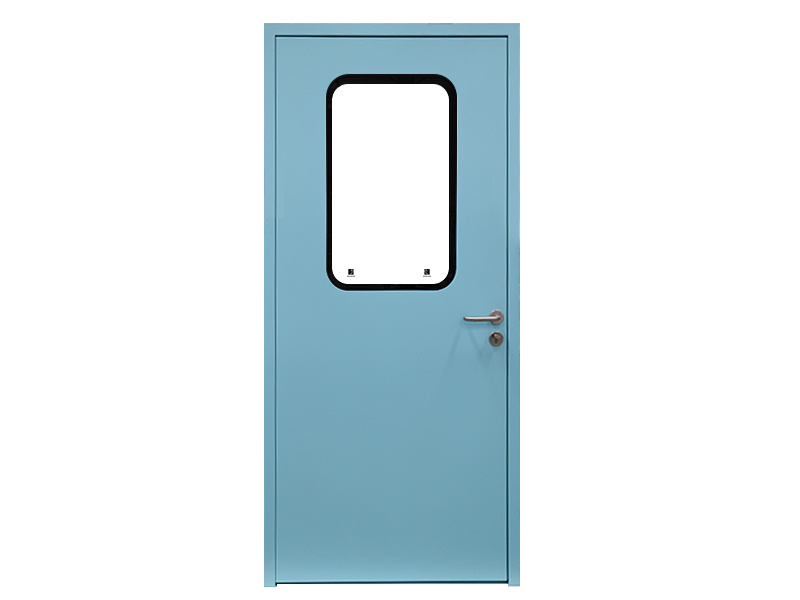
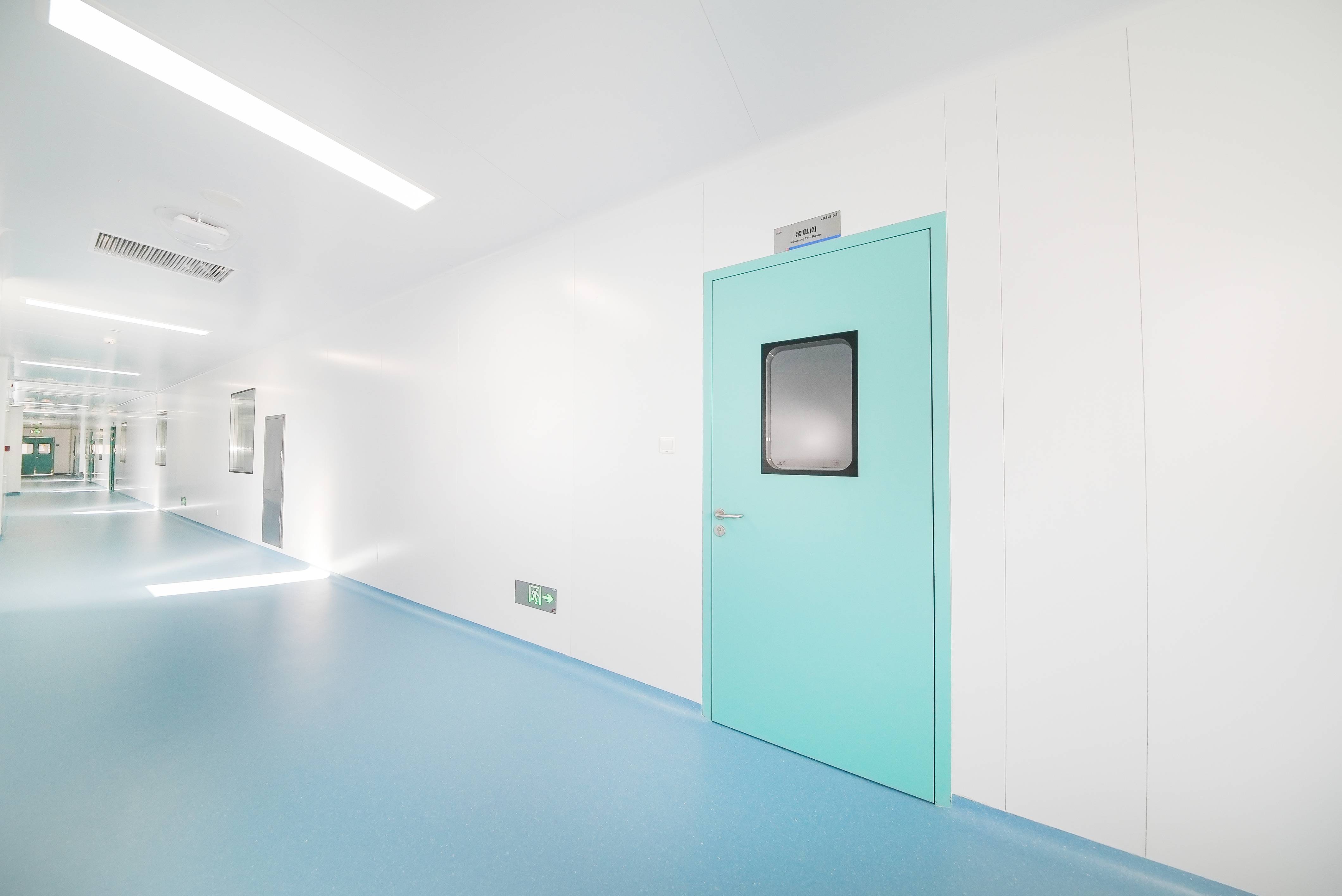
For modular projects, the envelope is especially important. Panels, ceilings, doors, windows, corners, and joints should support cleaning, sealing, durability, and long-term contamination control. Wiskind's integrated cleanroom solutions and cleanroom doors and windows pages are useful internal references for readers comparing component choices.
Supporting equipment also deserves early attention. Fan filter units, pass boxes, air showers, laminar flow hoods, lighting, and storage cabinets can all affect cleanliness performance and operating discipline. Readers planning a new facility can review Wiskind's cleanroom equipment page when they move from standard selection to room configuration.
Start with the product and process. A sterile injectable line, a semiconductor photolithography zone, a medical device assembly room, and a lithium battery workshop may all need cleanrooms, but they do not need the same class, pressure layout, humidity strategy, or material system.
· Is the product sterile, sensitive, hazardous, or particle-sensitive?
· Is the product exposed during manufacturing?
· Which market will regulate or audit the facility?
· Do you need ISO classification only, or GMP qualification as well?
· Will the room be tested at rest, in operation, or both?
· Could a modular cleanroom construction approach reduce installation time or make future expansion easier?
For pharmaceutical projects, define the GMP grade first, then align the ISO classification, airflow, pressure cascade, monitoring, and validation plan around it. For electronics, semiconductor, medical device, and industrial cleanrooms, ISO classification may be the main design language, supported by process-specific requirements.
Industry needs can also change the design logic. For example, a lithium-ion battery cleanroom may require tight humidity control and safety zoning, while semiconductor facilities may require ULPA filtration, static control, and extremely stable temperature conditions.
Cleanroom standards are easier to understand when you separate the systems. ISO 14644 tells you how many particles are allowed in the air. GMP tells you how the cleanroom must protect the product during manufacturing. FS 209E is old terminology that still appears in project conversations, but it should be translated into ISO classes for modern specifications.
If you are planning a cleanroom in 2026, the best starting point is not only, What class do we need? A better question is: what product are we protecting, what risks must we control, and which standard will the facility be judged against? Once those answers are clear, Wiskind Cleanroom can help connect standards, room layout, component selection, and installation planning into a practical cleanroom system.
For project support, readers can start from the original Wiskind cleanroom standards guide or contact Wiskind Cleanroom for a project-specific discussion.

Wiskind Cleanroom specializes in cleanroom enclosure system , ceiling system, cleanroom doors and windows and related product development, manufacturing, sales, consulting and services.

 Chinese
 English
 Russian
 French
 Spanish
 Portuguese
 Arabic
 Korean
 German
 Japanese
 Thai
Thai Hindi
Hindi