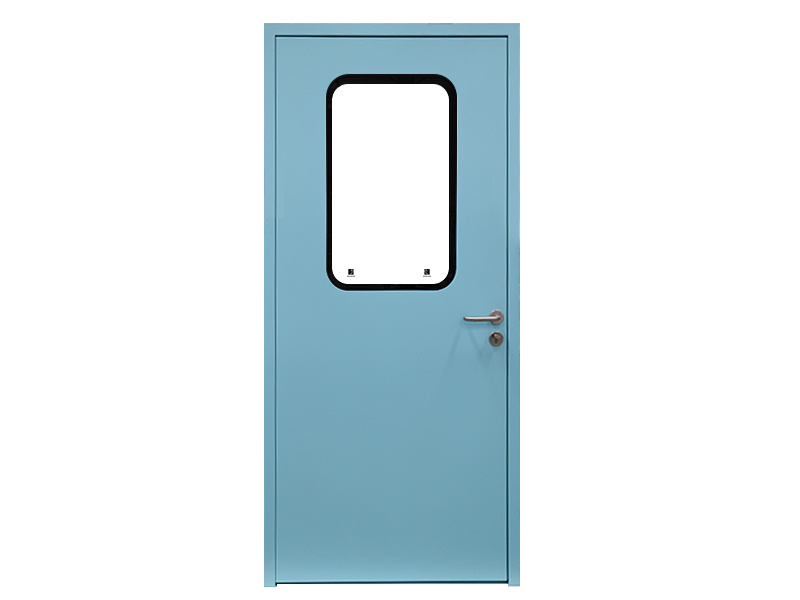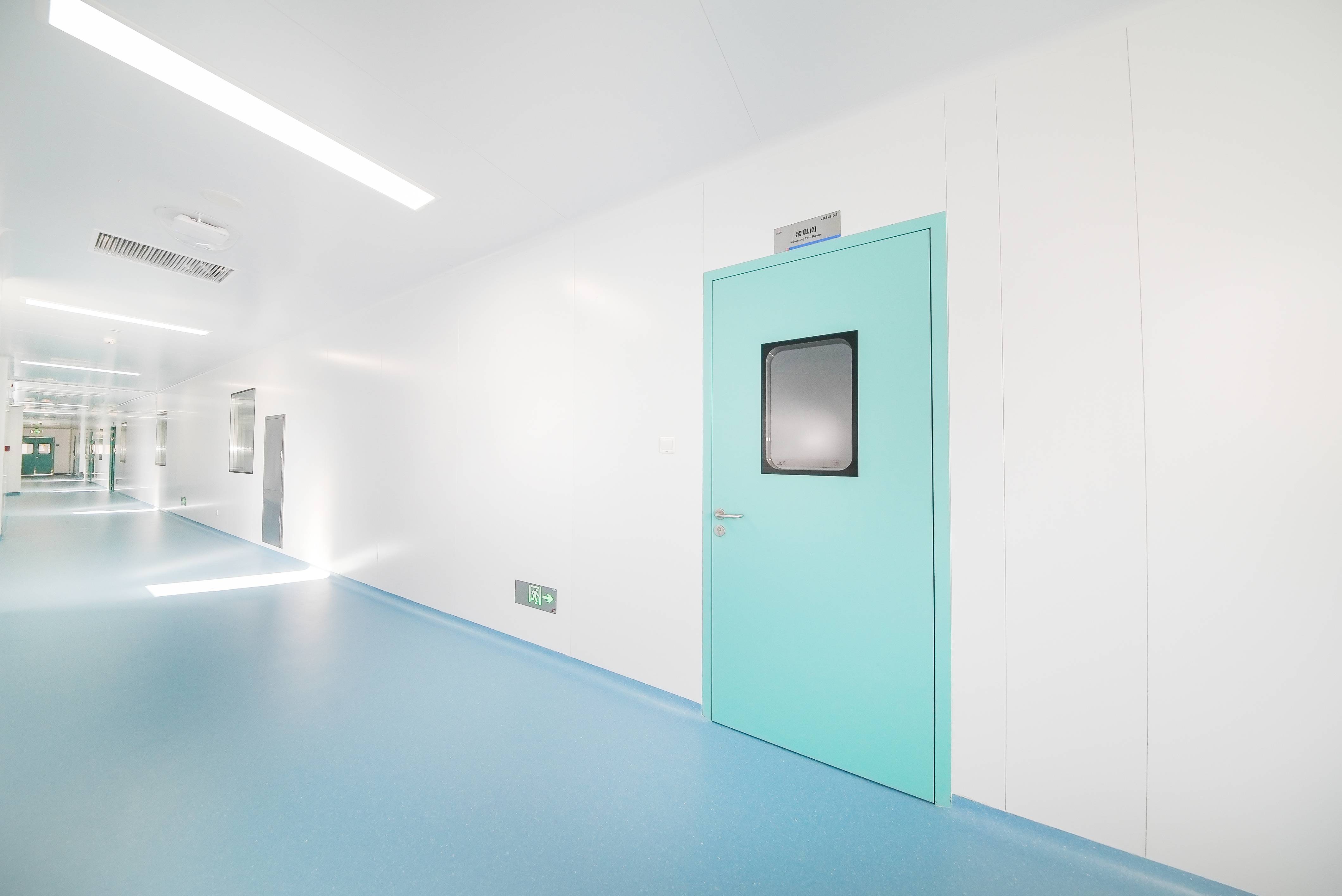


We have a passion for unconventional solutions that bring your vision to life.
VHP-resistant cleanroom panels are made for rooms that are decontaminated with vaporized hydrogen peroxide on a regular basis. Their job is to keep wall and ceiling surfaces smooth, sealed and easy to clean after repeated exposure. You will often find them in pharmaceutical, biotechnology and healthcare facilities.
That sounds straightforward, but the face material is only one part of the decision. The joints, sealants, cut edges and installation details all come into contact with the decontamination process. The actual VHP cycle matters too.
This guide looks at why some panels fail, how the main surface options compare and what to ask a supplier before you approve a cleanroom wall system.
A cleanroom panel can be described as VHP resistant when its exposed surface can handle the facility's validated VHP cycles without unacceptable blistering, corrosion, discoloration or loss of adhesion. The surface should stay smooth, non-porous and easy to clean throughout its intended service life.
The panel is usually installed as part of a complete cleanroom partition system. Corners, wall bases, doors, windows and service openings must work with the same cleaning and decontamination routine.
VHP stands for vaporized hydrogen peroxide. Facilities use it to decontaminate enclosed rooms and equipment at relatively low temperatures. After the cycle, hydrogen peroxide breaks down into water and oxygen. The CDC overview of vaporized hydrogen peroxide notes that material compatibility is one of the factors that must be checked before equipment or finishes are exposed to the process.
VHP is effective because hydrogen peroxide is a strong oxidizer. That same property can be hard on coatings, adhesives and sealants that were never intended for repeated exposure.
Even a conventional coated-steel surface can contain microscopic pores or suffer small scratches during installation. If hydrogen peroxide reaches the space between the coating and the steel, it can break down into water and oxygen. Wiskind's material analysis identifies this as one possible cause of:
• Coating blistering
• Chalking or discoloration
• Loss of adhesion
• Exposed metal and corrosion
• Rough or damaged surfaces that are harder to clean
The level of risk depends on the exact material, VHP concentration, humidity, dwell time, temperature, aeration and number of cycles. A panel that performs well during routine wipe-downs may still struggle with repeated room-scale decontamination.
If a panel coating starts to blister or lift, the problem is not only cosmetic. The wall is part of the contamination-control system, so damage can affect cleaning, inspection and maintenance.
• Cleaning and inspection become more difficult
• Residue can collect around damaged areas
• Loose coating may create particles
• Exposed steel can begin to corrode
• Panels may need early repair or replacement
• Maintenance can interrupt production
It is easier and less disruptive to assess surface durability during design than to deal with damaged panels after the room is operating.
There is no single best surface for every project. Wiskind offers several cleanroom sandwich wall panel options with different face materials and cores. The right choice depends on the cleaning chemicals, fire rating, wall height, structural load and budget.
Surface option | VHP suitability | Main advantages | Points to verify |
Standard pre-painted steel | Often limited unless tested | Lower cost and easy to source | Some coatings may degrade after repeated exposure |
PVDF-coated steel | Usually better than standard paint | Good chemical and corrosion resistance | Results vary by formulation and cycle conditions |
304 stainless steel | Generally strong | Durable, non-porous and easy to clean | Higher cost and a more reflective finish |
Specialized VHP-resistant surface | Made for repeated exposure | Chemical resistance with a coated-panel finish | Ask for the test method, results and installation limits |
Do not approve a surface based only on a label such as "PVDF" or "chemical resistant." Ask for evidence that applies to the exact coating and substrate offered for your project.
Wiskind developed Endure for biological and pharmaceutical rooms where VHP cycles, alcohol wipe-downs and other cleaning routines are part of normal operation.
The surface is made to remain intact during hydrogen peroxide exposure. In practice, that means a lower risk of blistering, discoloration and corrosion when the panel is used within its tested conditions.
A VHP-resistant finish can be compromised before the first cycle if it is scratched during transport or installation. A harder-wearing surface helps protect the panel through handling, construction and day-to-day use.
A high-performance coating is not much use if it cracks while the panel is being formed. The surface needs to stay bonded around bends, cut-outs and prefabricated connection details.
A low-gloss finish reduces harsh reflections and gives the room a more consistent appearance. It can also be more comfortable for operators working long shifts under bright artificial lighting.
Wiskind previously compared panel surfaces with a 30% hydrogen peroxide cup test. The reported results were:
Tested surface | Wiskind-reported observation |
PVDF-coated panel sample | Blistering began after approximately 96 hours |
Endure panel sample | Surface remained in good condition after 6,000 hours |
Important: These results are useful, but they need context. A liquid cup test is not the same as a complete room-scale VHP cycle. Ask for the current report and compare its conditions with your planned concentration, humidity, dwell time and cycle frequency.
VHP-resistant panels make the most sense where hydrogen peroxide decontamination is part of the operating routine, including:
• Biopharmaceutical production facilities
• Vaccine and blood-product manufacturing areas
• Pharmaceutical cleanroom B-zones
• Biological laboratories
• Aseptic processing support areas
• Hospital sterile environments and operating rooms
• Animal research facilities
• Cleanroom pass boxes and transfer areas
Frequency matters. A room treated a few times a year may not need the same specification as a facility that runs validated VHP cycles every week.
For examples of completed installations, explore Wiskind's pharmaceutical cleanroom projects. They show how different wall, ceiling, door and window components are combined in working facilities.
1. Define the decontamination protocol: Start with the real process, not the marketing label. Record the hydrogen peroxide concentration, temperature, humidity, dwell time, aeration period and expected number of cycles each year.
2. Request material-compatibility evidence: Ask how the material was tested and for how long. Look for coating adhesion, discoloration and corrosion observations, then confirm that the report covers the same material being quoted.
3. Evaluate the complete wall system: A resistant face sheet will not protect weak joints or incompatible sealants. Review the panel joints, gaskets, fasteners, adhesives, coving, service penetrations and cleanroom doors and windows as one system.
4. Separate surface and core requirements: The exposed surface controls chemical resistance, while the core affects fire performance, strength, insulation and acoustics. Choose each part for the job it needs to do.
5. Account for installation damage: Scratches, exposed cut edges and poorly sealed penetrations can undermine an otherwise suitable panel. Use factory-made openings where practical and inspect the enclosure before commissioning.
6. Review cleaning compatibility: VHP may be only one part of the cleaning program. Check the panel against alcohol, detergents, sporicides and any routine wipe-down chemicals used on site.
7. Consider maintenance and replacement: Ask what happens if a panel is damaged or utilities need to be reached. A modular cleanroom system can make repairs and later changes easier, which may reduce shutdown time.
Not always. Stainless steel offers strong chemical resistance, but it is not the only workable choice for a VHP-exposed cleanroom.
A purpose-made coated panel can give you a lower-glare finish and fit more easily into a modular wall system. Stainless steel may still be the better choice in areas exposed to heavy impact, harsh chemicals or specific hygiene requirements.
The decision should come down to documented compatibility, the conditions in the room, project standards and the cost of maintaining the finish over time.
Instead of sourcing the wall panel in isolation, project teams can review Wiskind's cleanroom product systems, including partition walls, ceilings, doors, windows and cleanroom equipment.
For rooms that use vaporized hydrogen peroxide, Endure offers a surface developed for biological and pharmaceutical cleanroom applications.
Wiskind can coordinate the panel with ceilings, corners, doors, windows and factory-made openings. This makes it easier to check the room envelope as a complete system rather than treating each component as a separate purchase.
If you are still comparing options, review Wiskind's technical brochures and cleanroom resources before deciding on the face material, core and connection details.
VHP stands for vaporized hydrogen peroxide. It is a low-temperature method used to decontaminate enclosed rooms and equipment. The cycle settings and the materials inside the room both affect how well the process works.
Its exposed surface can handle repeated hydrogen peroxide cycles without unacceptable blistering, corrosion, discoloration or loss of adhesion. The joints, sealants and other exposed components also need to be compatible.
Hydrogen peroxide can enter through microscopic coating defects or scratches. If it reaches the space between the coating and the steel, the resulting reaction can weaken adhesion and lift the coating from the surface.
Some are, but the name PVDF alone is not enough. Performance varies by formulation and cycle conditions, so ask for test results for the exact material offered for your project.
A useful test report states the concentration, temperature, humidity, exposure time or cycle count and any changes in adhesion, appearance or corrosion. Accelerated liquid tests can compare materials, but they should not be treated as a direct copy of the room's VHP process.
Share your planned VHP protocol and basic project requirements with Wiskind Cleanroom. The team can then send the relevant specifications, comparison data and available test reports.
Planning a pharmaceutical or biological cleanroom that will use VHP? Share the room layout, cleanliness classification, cleaning agents, cycle conditions and fire requirements. Wiskind's technical team can use those details to narrow the panel surface, core and enclosure options before preparing a recommendation.
Request VHP Panel Test Data and a Project Recommendation

Wiskind Cleanroom specializes in cleanroom enclosure system , ceiling system, cleanroom doors and windows and related product development, manufacturing, sales, consulting and services.

 Chinese
 English
 Russian
 French
 Spanish
 Portuguese
 Arabic
 Korean
 German
 Japanese
 Thai
Thai Hindi
Hindi