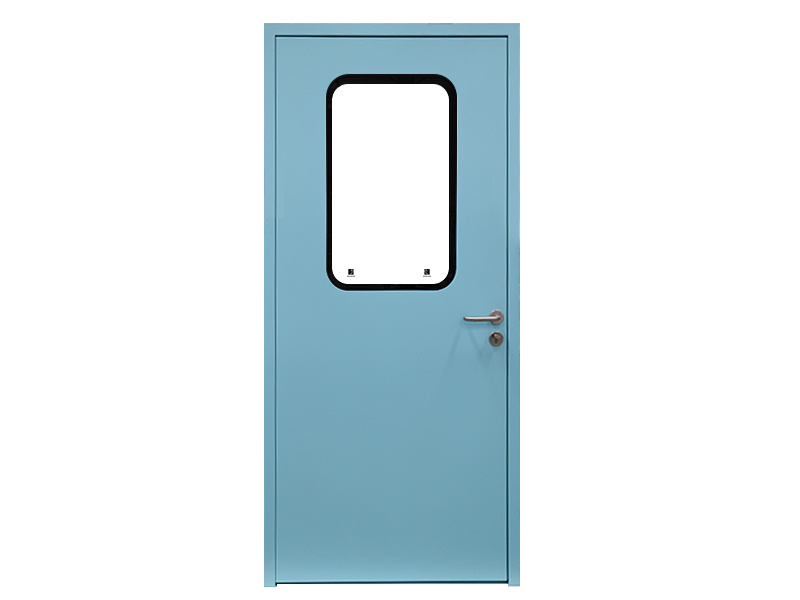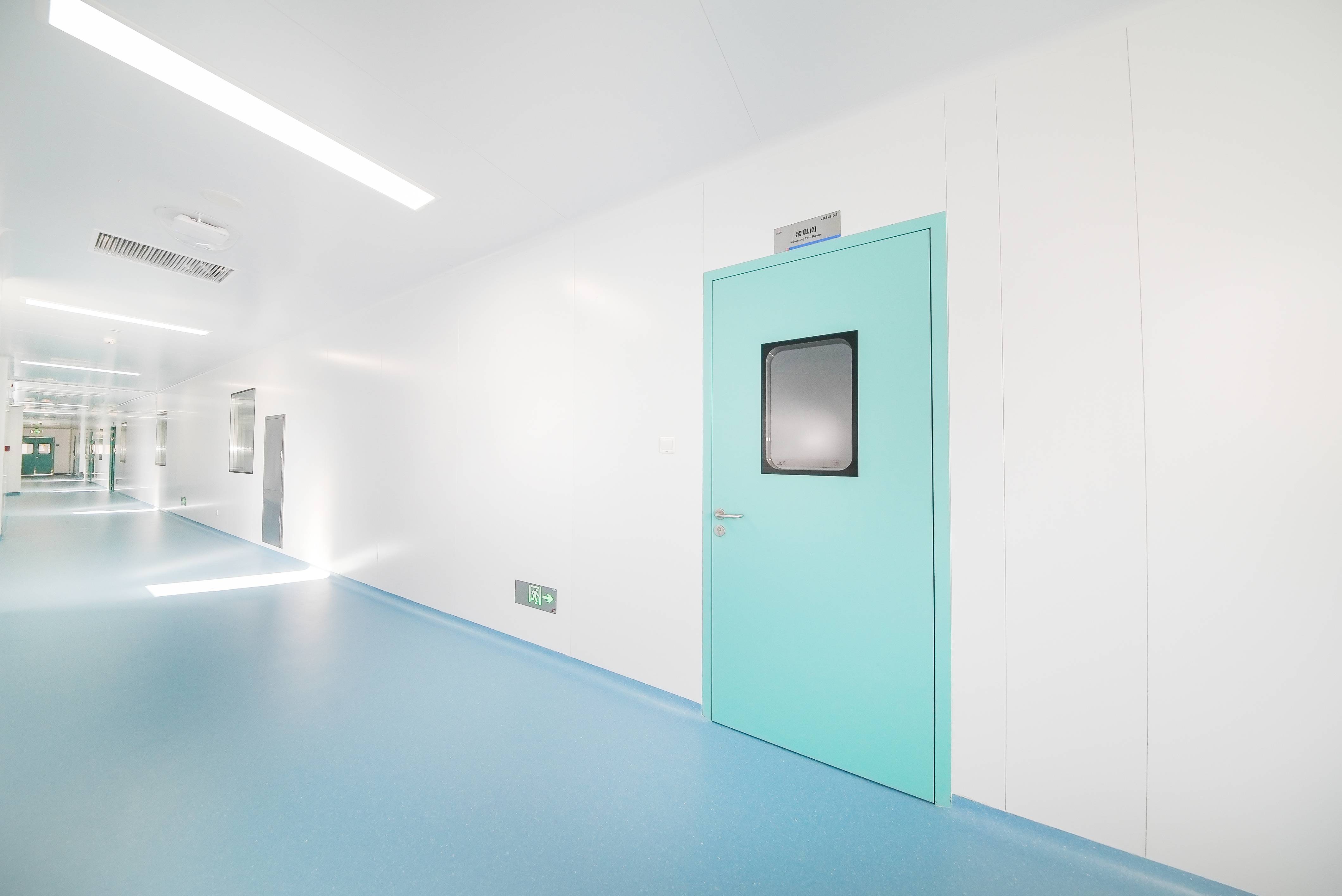


We have a passion for unconventional solutions that bring your vision to life.
Condensation on cleanroom walls is not just an appearance problem. Moisture can collect at panel joints, door frames, windows, corners, and service penetrations, creating difficult-to-clean areas and increasing the risk of corrosion, coating damage, and microbial growth. In a controlled environment, even a small wet spot may indicate a larger problem with humidity, insulation, airtightness, or wall-system detailing.
To prevent condensation on cleanroom walls, keep every interior surface above the air dew point. That requires a coordinated approach: control indoor humidity, interrupt thermal bridges, choose the right insulated panel, seal air and vapor paths, and treat every junction as part of one continuous enclosure. This guide explains how to identify the cause of cleanroom wall condensation and select a durable solution.
Condensation forms when warm, moisture-laden air contacts a surface colder than its dew-point temperature. The air immediately next to the cold surface can no longer hold all its water vapor, so liquid water appears on the panel, frame, joint, or fitting.
This often occurs even when the main field of a cleanroom wall looks dry. Metal is a good conductor of heat. A steel frame, aluminum profile, fastener, or poorly insulated joint can carry heat through the enclosure much faster than the insulated panel core. This localized path is called a thermal bridge, or cold bridge. The temperature at that point may fall below the dew point while the rest of the panel remains safely above it.
The risk rises when one or more of the following conditions are present:
· A low-temperature process room adjoins a warmer, more humid area.
· Outdoor humidity reaches the cleanroom envelope through leakage paths.
· The facility operates in a cold climate or experiences large seasonal temperature differences.
· Metal frames create continuous conductive paths through the panel system.
· Insulation is missing, compressed, wet, or discontinuous around joints and openings.
· Door, window, ceiling, or floor details interrupt the air and vapor barrier.
· HVAC operation allows humidity or room temperature to drift outside the design range.
· Frequent washdown or wet cleaning adds moisture faster than the room can remove it.
The key point is that condensation is a system problem. Increasing panel thickness alone may not solve it if the frame, joint, window, or penetration still bypasses the insulation.
Cleanroom classification and facility standards focus on controlling contamination and maintaining the intended environmental performance. ISO 14644-4 addresses cleanroom design, construction, start-up, energy management, and life-cycle performance. For aseptic processing facilities, FDA guidance also emphasizes smooth, hard, easily cleanable wall and ceiling surfaces.
Visible moisture works against these goals. It can:
· Create a site where dust, residue, and microorganisms are harder to remove.
· Stain or corrode metal components and damage surface coatings.
· Weaken sealants and contribute to gaps at panel joints.
· Signal that temperature and humidity are not stable at critical interfaces.
· Reduce the service life of wall panels, frames, doors, and windows.
Water droplets should not be treated only with more frequent wiping. The source must be identified, documented, and corrected.
Begin the inspection at transitions, not at the center of the panel. Most failures appear where different materials or systems meet.
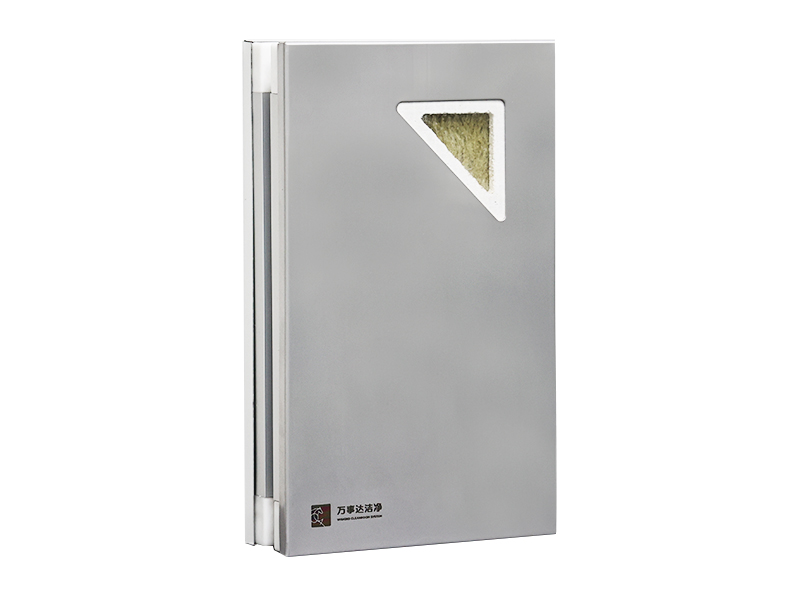
Check vertical and horizontal joints, edge frames, tongue-and-groove connections, exposed fasteners, and panel ends. A continuous metal edge can act as a thermal bridge even when the panel core provides good insulation.
Door frames, vision panels, and glazing spacers often conduct heat more readily than the surrounding wall. Also inspect the seal between the frame and wall panel. Air leakage can carry humid air into the joint, where it cools and condenses.
These locations combine structural supports, tracks, coves, sealants, and sometimes dissimilar insulation systems. Missing thermal breaks or incomplete seals can produce narrow cold lines that become wet before the larger wall surface does.
Cables, pipes, ducts, pass boxes, and equipment ports can interrupt insulation and sealing layers. Openings cut on site are especially vulnerable if the surrounding panel core is exposed or the new frame is not thermally isolated.
Do not select a remedy until the operating conditions and failure location are understood.
1. Record the room conditions. Measure air temperature and relative humidity on both sides of the affected wall. Note whether the problem appears during production, cleaning, shutdown, start-up, or a specific season.
2. Calculate the dew point. The dew point is the surface temperature at which condensation begins under the measured conditions. The design should include a safety margin rather than allowing the wall surface to operate exactly at the dew point.
3. Measure surface temperatures. Use calibrated contact sensors or an infrared camera. Map panels, joints, frames, openings, corners, and floor or ceiling tracks.
4. Inspect seals and pressure relationships. A thermal image identifies cold areas, but it does not prove the cause. Check damaged sealant, loose joints, hidden gaps, and pressure differences that may drive humid air through the assembly.
5. Review the wall and HVAC together. Confirm panel core, frame material, joint geometry, seals, and adjacent-room conditions. Check whether washdown, door opening, defrost cycles, or HVAC setbacks coincide with the problem.
This process separates four common causes: excess room humidity, inadequate insulation, localized thermal bridging, and air or vapor leakage. Many projects have more than one cause.
The first control is the air itself. Specify and monitor temperature and relative humidity for the process, product, personnel, and enclosure. The dehumidification solution should account for people, outside air, door openings, washdown, material transfer, and moisture generated by the process.
Avoid aggressive night or weekend HVAC setbacks without checking the effect on surface temperature and humidity. A cleanroom can remain within its normal range during production yet develop condensation during a shutdown transition.
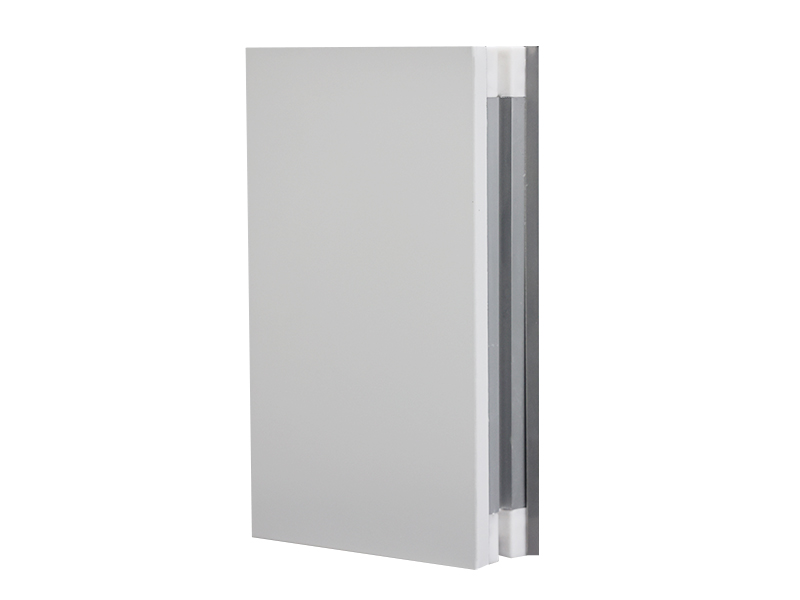
A thermal break uses a low-conductivity component to interrupt a conductive metal path. In a cleanroom wall system, this principle must be applied to panel frames, corners, tracks, door and window interfaces, and other structural connections.
Wiskind's anti-cold-bridge cleanroom panels are designed for low-temperature and high-humidity conditions. Their frame arrangement reduces direct thermal conduction at the panel edge, where conventional metal framing can create condensation risk.
When comparing systems, do not ask only for the thermal conductivity of the core. Request details showing how joints, edges, fasteners, and accessories maintain the thermal break across the assembled wall.
Panel selection should reflect the maximum temperature difference, expected humidity, fire requirements, structural load, cleaning chemicals, and service life. Common cores include polyurethane, rock wool, honeycomb, magnesium board, gypsum, and EPS. Each offers a different balance of insulation, fire performance, strength, weight, moisture resistance, and cost.
Use project-specific heat-transfer calculations instead of copying a standard specification from another facility. A panel that is adequate between two conditioned rooms may be unsuitable next to cold storage, a freeze-drying area, an exterior wall, or a high-humidity process.
Explore Wiskind's cleanroom sandwich wall panels when comparing core materials and finishes.
Insulation slows heat flow, but uncontrolled air leakage can transport a large amount of moisture into a cold assembly. The warm, humid side of the enclosure must be sealed so air cannot reach a surface below the dew point.
Continuity matters at every panel joint, corner, track, door, window, and penetration. Sealants and gaskets should be compatible with the panel finish, cleaning agents, temperature range, pressure differential, and expected movement. Workmanship must be inspected before concealed areas become inaccessible.
Openings should not be treated as accessories added after the wall is selected. Their frames, glazing, seals, and connection details affect both airtightness and surface temperature.
Specify thermally broken frames where necessary. Select glazing based on the actual temperature difference and humidity. Prefabricated cleanroom wall openings can improve dimensional control and reduce damage to panel cores compared with uncontrolled field cutting.
Coordinate cleanroom doors and windows with the wall supplier so that profiles, seals, finishes, and thermal details work as one system.
Even a well-designed panel can fail if installation leaves gaps or damaged insulation. Follow an approved cleanroom wall-panel installation guide and verify the following before handover:
· Verify that panels are stored dry and protected from impact.
· Confirm joint engagement, alignment, and fastener placement.
· Inspect seals continuously, including concealed transitions.
· Repair coating damage using an approved method.
· Check penetrations against approved shop drawings.
· Test wall interfaces under realistic temperature, humidity, and pressure conditions.
· Record baseline thermal images for future comparison.
Commissioning should reproduce the most demanding expected operating condition, not only a comfortable room-temperature condition on the day of inspection. Document these checks alongside the project's cleanroom construction requirements.
Trend room temperature, relative humidity, pressure differential, and alarms. Add targeted surface-temperature sensors where the consequence of condensation is high or where thermal modeling identified limited margin.
During routine inspections, look for fogging, staining, corrosion, softened sealant, joint movement, peeling coating, and unexplained microbial findings. Compare observations with production and HVAC data. Early intervention is far less disruptive than replacing wet panels after the problem spreads.
First, contain the operational risk according to the facility's quality procedures. Protect exposed materials, document the affected area, and determine whether environmental monitoring or product assessment is required.
Investigate before modifying the wall:
· Confirm whether the water is surface condensation, an internal leak, washdown residue, or moisture entering from the building shell.
· Compare surface temperature with the measured dew point.
· Review recent HVAC, cleaning, maintenance, and production events.
· Inspect both sides of the wall, use thermal imaging to find cold paths, and check for wet or displaced insulation.
Short-term humidity reduction may stop visible water, but it is not a permanent fix for a thermal bridge. Adding sealant to the visible side may also trap moisture if the actual leakage path remains open. Correct the verified cause, then retest under worst-case operating conditions.
Before approving a cleanroom wall specification, confirm:
· Maximum and minimum temperatures on both sides of every wall are defined.
· Peak, shutdown, cleaning, and start-up humidity conditions are included.
· Dew-point calculations include a safety margin.
· Whole-assembly thermal performance is evaluated, not only the panel core.
· Frames, joints, corners, tracks, fasteners, doors, and windows include thermal-break details where needed.
· Air and vapor seals remain continuous at all transitions and penetrations.
· Panel surfaces are smooth, durable, non-shedding, and compatible with the cleaning protocol.
· Installation inspections and acceptance criteria are documented.
· Commissioning tests reproduce realistic pressure, temperature, and humidity conditions.
Condensation prevention begins before panel production. The room setpoints, adjacent spaces, climate, pressure cascade, cleaning method, opening schedule, and structural details all influence the wall specification.
Wiskind provides cleanroom enclosure products and integrated support for pharmaceutical, food and beverage, electronics, semiconductor, healthcare, and other controlled environments. For a new facility or a recurring condensation problem, share your room conditions, drawings, and operating requirements through Wiskind's cleanroom design and construction services. A coordinated wall-system review can identify thermal bridges before they become wet surfaces.
Contact Wiskind for a cleanroom wall-system assessment.
Condensation occurs when a wall, joint, frame, or fitting becomes colder than the dew point of the surrounding air. Common causes include high humidity, inadequate insulation, conductive metal frames, air leakage, damaged seals, and poor detailing around doors, windows, corners, or penetrations.
Not always. More insulation can raise the temperature of the main panel surface, but a metal frame or poorly sealed joint may still bypass the insulation. The complete wall assembly, including openings and junctions, must be evaluated.
A thermal bridge is a low-resistance path that conducts heat through the wall faster than the surrounding insulated area. Panel edge frames, tracks, fasteners, structural supports, door frames, and window frames are common examples.
No. They are particularly useful in low-temperature rooms, high-humidity spaces, cold climates, and interfaces between rooms with different setpoints. Any project with a surface-temperature risk at metal joints may benefit from thermal-break detailing.
Measure temperature and humidity, calculate the dew point, and scan the wall with an infrared camera under a meaningful temperature difference. Confirm the findings with contact measurements and an inspection of joints, seals, and wall construction.
The diagnosis determines the answer. If humidity exceeds the design range, HVAC control may be the main issue. If condensation appears only along a frame or joint while room conditions are correct, the enclosure detail is likely responsible. Many facilities need improvements to both.
· ISO 14644-1:2015 — Classification of air cleanliness by particle concentration
· ISO 14644-4:2022 — Design, construction and start-up of cleanrooms
· FDA Guidance for Industry — Sterile Drug Products Produced by Aseptic Processing
· ASHRAE terminology — thermal bridge and thermal break

Wiskind Cleanroom specializes in cleanroom enclosure system , ceiling system, cleanroom doors and windows and related product development, manufacturing, sales, consulting and services.

 Chinese
 English
 French
 Spanish
 Portuguese
 Arabic
 Korean
 German
 Japanese
 Thai
Thai Hindi
Hindi Russian