


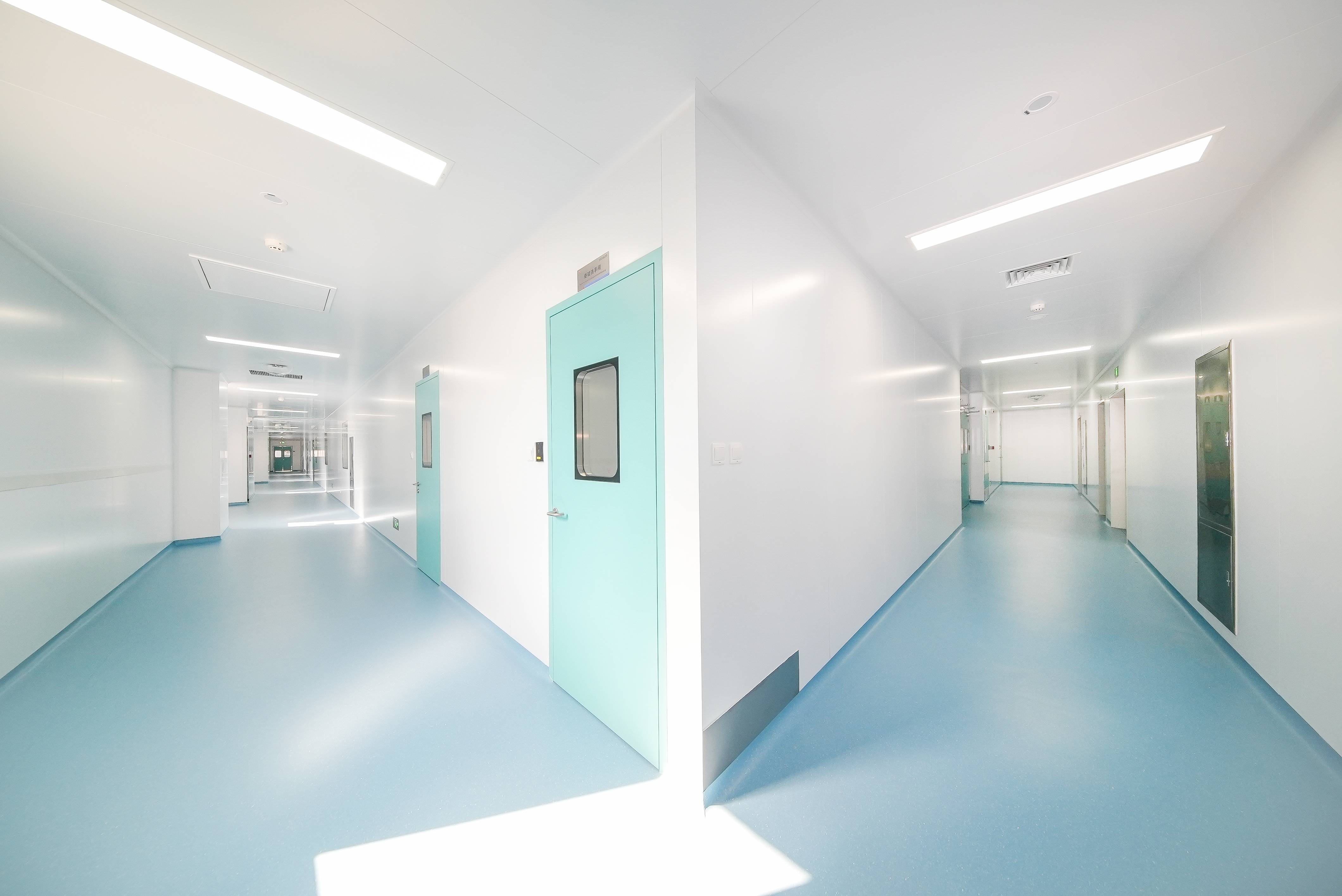
Wiskind provides different cleanroom sandwich panels with excellent performance, factory prefabrication, field splicing and simple module installation functions. In response to the problems in different industries, we provide solutions such as removable cleanroom panel, VHP resistant cleanroom panel, and cleanroom smart design.
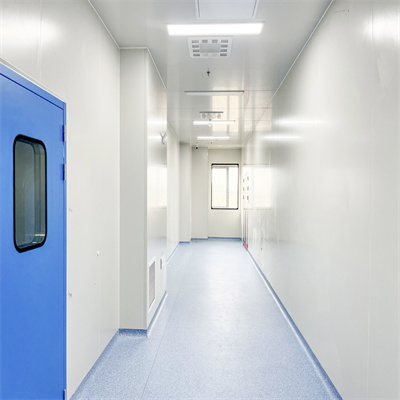
The Wiskind cleanroom partition system is a high-performance, modular solution for controlled environments.
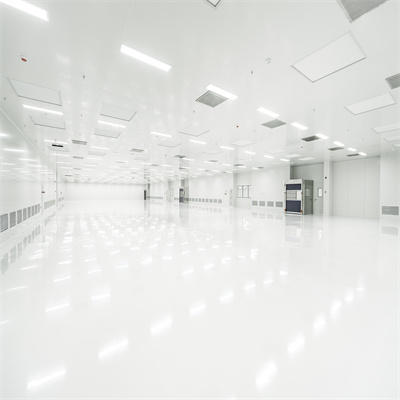
The Wiskind cleanroom ceiling system includes grid ceilings and fan filter unit (FFU) ceiling systems, ensuring stability and flexibility for cleanroom construction.
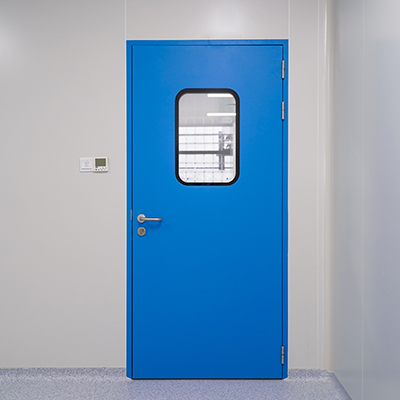
Wiskind offers high-performance cleanroom doors and windows with durability and easy maintenance, complying with industry standards.
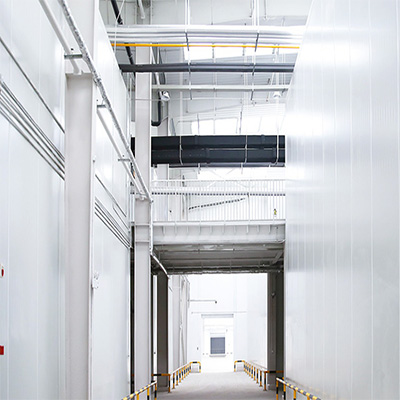
The Wiskind cold storage partition system includes C, E, and H-Type coldroom panels that combine thermal efficiency with compliance to industrial cold chain standards.
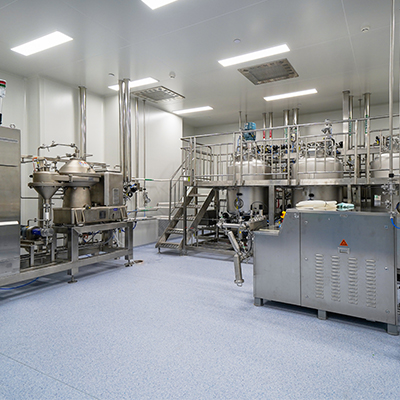
Wiskind provides cleanroom equipment that ensures precisely controlled environments, ranging from FFUs to ISO/GMP-certified air showers.

Wiskind's CleanCube intelligent design software streamlines cleanroom implementation through end-to-end digital integration, achieving 30% cost reduction.
A cleanroom is essentially a controlled environment where the concentration of airborne particles is minimized. This sealed space is designed to limit the introduction, generation, and retention of particles. Additionally, various factors such as temperature, humidity, and pressure are often regulated to meet the specific needs of different cleanroom systems or cleanroom projects.
Modular cleanrooms are a type of prefab cleanroom that are assembled using pre-engineered panels manufactured off-site. These modular cleanrooms are easy to install, durable, and flexible, enabling clean room manufacturers to provide quick and cost-effective solutions. Unlike traditional stick-built cleanrooms, modular cleanrooms can be expanded, relocated, or reconfigured, making them an ideal choice for businesses looking for versatile and scalable cleanroom systems.
Contents
Cleanroom Classes 100, 1,000, 10,000 & 100,000 Explained
What each class actually means
Class 100 is not ISO 100 — and three other mistakes worth money
The full ISO 14644-1 particle table
How the old classes map to GMP grades
If your tender documents still say Class 100
Testing: what changed when ISO took over
Which class do you actually need?
Target page: /what-are-the-different-classifications-of-cleanrooms-like-class-100-class-1000-class-10000-and-class-100000.html
Class 100, Class 1,000, Class 10,000 and Class 100,000 come from US Federal Standard 209E, which was withdrawn in November 2001. In ISO 14644-1 terms they correspond to ISO 5, ISO 6, ISO 7 and ISO 8. The old number is a count of particles ≥0.5 µm per cubic foot; the ISO number is a logarithmic class per cubic metre. That unit change is where most of the confusion starts.
This page is the conversion reference. If you already know which system you are working in and want the full picture (ISO classes, GMP grades, zoning, validation), start with our cleanroom standards guide.
FS 209E class | Metric (M) | ISO 14644-1 | Particles ≥0.5 µm per ft³ | Particles ≥0.5 µm per m³ | Typical air changes/h* | Typical use |
Class 100 | M3.5 | ISO 5 | 100 | 3,520 | 240–600 | Aseptic filling zone, isolator interior, lithography |
Class 1,000 | M4.5 | ISO 6 | 1,000 | 35,200 | 150–240 | Sterile compounding, implant and optics assembly |
Class 10,000 | M5.5 | ISO 7 | 10,000 | 352,000 | 60–150 | Background to a Grade C zone, IVD, electronics |
Class 100,000 | M6.5 | ISO 8 | 100,000 | 3,520,000 | 20–60 | Grade D background, device assembly, packaging |
*Air change rates are industry practice, not a requirement of ISO 14644-1. The standard sets particle limits; how many air changes you need to hold them depends on the room, the equipment and the number of people inside. Treat these ranges as starting points for design, not as compliance values.
Federal Standard 209 was first issued in 1963 by the US government to give the aerospace and defence industries a common way to describe air cleanliness. It went through revisions, from 209A to 209E, and the 1992 edition, FS 209E, became the version most factories and engineering firms actually used.
The naming rule is simple and easy to misread: Class N means no more than N particles of 0.5 µm or larger in one cubic foot of air. So Class 100 allows 100 such particles per cubic foot. Read the unit carefully: cubic foot, not cubic metre.
FS 209E also carried a metric notation alongside the class number, written as M followed by a value. The M value is the base-10 logarithm of the particle count per cubic metre at ≥0.5 µm rounded to one decimal. Class 100 is M3.5 because 103.5 ≈ 3,162 particles/m³, which rounds to the 3,520 figure used in the standard's tables. Both notations ("Class 100" and "M3.5") describe the same room.
In 2001 the US General Services Administration withdrew FS 209E without a direct replacement, and ISO 14644-1 took over. The withdrawal is why you now see ISO classes in new specifications. It is also why Class 100 is still everywhere: 25 years of drawings, tenders, validation protocols and equipment nameplates were written in the old system, and nobody went back to relabel them.
3,520 particles per cubic metre at ≥0.5 µm, with 29 particles/m³ at ≥5 µm. This is the class where the air must move in a single direction (unidirectional flow, historically called laminar flow) at roughly 0.36–0.54 m/s (70–110 ft/min) across the working zone. Air changes of 240–600 per hour are typical because the room is being flushed continuously rather than mixed.
In pharmaceutical manufacturing Class 100 is the critical zone: the area where sterile product, stoppers or vial surfaces are exposed. In electronics it is lithography and other particle-critical process steps. At this level the particle count is dominated by what is happening inside the room, not by the supply air. That is why gowning, behaviour and dynamic monitoring matter more here than filter efficiency alone. Our ISO 5 cleanroom classification guide covers the design and testing detail for this class.
At 35,200 particles/m³ this class is ten times looser than ISO 5, and it is where designers start making real choices. Most ISO 6 rooms are no longer unidirectional: a well-designed turbulent airflow with HEPA-filtered supply at the ceiling and low-level returns will hold the class. Where the product is exposed and the risk is high, designers still often use unidirectional flow at this class, which is a risk decision rather than a particle-count requirement.
Typical applications are sterile compounding buffer areas, implant assembly, precision optics, and semiconductor steps that do not need lithography-grade control. The ISO 6 cleanroom guide has the monitoring and design detail.
This is the most common class in pharmaceutical facilities, and not because it is especially clean. At 352,000 particles/m³ it is the standard background to a critical zone: EU GMP Grade C requires ISO 7 at rest, and USP <797> requires a buffer area of at least ISO 7 around an ISO 5 direct compounding area.
ISO 7 is also where the air changes conversation gets real. A room at 60 air changes and a room at 150 air changes can both meet ISO 7 at rest. The difference shows up in recovery time after a door opens, in particle counts during operation, and in HVAC capital cost. That is a design decision you should make explicitly, not inherit from a template. Our ISO 7 cleanroom guide sets out the requirements in full.
The loosest class in normal commercial use, at 3,520,000 particles/m³. EU GMP Grade D is ISO 8 at rest. Medical device assembly, packaging halls, food production and cosmetic manufacturing commonly sit here.
At ISO 8 the enclosure still matters (sealed panels, flush surfaces, coved corners, filtered supply), but the room is far more forgiving of traffic and door openings. If a project is being told it needs ISO 8 and the process does not involve exposed sterile product, it is worth checking whether the requirement came from a real risk assessment or from copying a previous specification. The ISO 8 cleanroom requirements are worth reading in full before you accept or challenge that number.
There is no ISO 100. ISO 14644-1 defines classes ISO 1 through ISO 9. A specification that says "ISO 100" is a transcription error, usually from someone converting "Class 100" by swapping the prefix. The correct conversion is ISO 5.
The old number is per cubic foot, not per cubic metre. The factor is 35.31. Reading Class 100 as "100 particles per m³" makes the room look 35 times cleaner than it is, and it will fail its first validation.
ISO 7 is not Grade B. EU GMP Grade B needs ISO 5 at rest and no more than ISO 7 in operation. That is two numbers, and most specifications quote one of them. Writing "Grade B" and "ISO 7" as if they were equivalent produces a room that passes at rest and fails during filling. If your specification works in grade letters rather than ISO numbers, our guide to Grades A, B, C and D sets out what each one actually requires.
Class 100 and ISO 5 are not numerically identical either. 100/ft³ converts to 3,531 particles/m³; ISO 5 is defined as 3,520. The 0.3% difference is rounding in the original standard, not a design tolerance. It only matters if someone is arguing about a single particle at the limit. Better to know it before that argument happens in a validation review.
Limits below are from ISO 14644-1:2015, in particles per cubic metre. Always confirm against the current edition of the standard before writing them into a contract or a validation protocol.
ISO class | ≥0.1 µm | ≥0.2 µm | ≥0.3 µm | ≥0.5 µm | ≥1.0 µm | ≥5.0 µm |
ISO 5 | 100,000 | 23,700 | 10,200 | 3,520 | 832 | 29 |
ISO 6 | 1,000,000 | 237,000 | 102,000 | 35,200 | 8,320 | 293 |
ISO 7 | — | — | — | 352,000 | 83,200 | 2,930 |
ISO 8 | — | — | — | 3,520,000 | 832,000 | 29,300 |
A dash means no limit is specified at that particle size for that class. This is a common source of tender errors. A specification that demands a ≥0.3 µm limit at ISO 7 is asking for something the standard does not define, and the supplier has to guess what was meant.
EU GMP grade | At rest | In operation | Old US label you may see |
Grade A | ISO 5 | ISO 5 | Class 100 |
Grade B | ISO 5 | ISO 7 | Class 100 at rest, Class 10,000 in operation |
Grade C | ISO 7 | ISO 8 | Class 10,000 at rest, Class 100,000 in operation |
Grade D | ISO 8 | Not specified | Class 100,000 |
Grade A and B also carry microbial limits and a ≥5 µm requirement at rest that this table does not show. The 2022 revision of EU GMP Annex 1 changed the wording and the monitoring expectations around these grades; work from the current version of Annex 1 and your national guidance, not from a summary table. Our GMP cleanroom levels guide goes into the microbiological side, and the FDA cleanroom requirements guide covers what 21 CFR 210/211 expects at each grade.
It comes up on tenders across the Middle East and Southeast Asia more often than you would expect, usually because the specification was written before 2001 or copied from an older plant and never revisited. Three practical points.
Do not silently substitute. If the contract says Class 100, the contract says Class 100. Propose the ISO equivalent in writing, with the conversion shown, and get it accepted as a technical clarification. A supplier who "helpfully" builds to ISO 5 without documenting the assumption has no defence if the client later reads the two as different things.
Name the test standard, not just the class. "Class 100" specifies a cleanliness level but not a test method. FS 209E sampling and ISO 14644-1:2015 sampling give different numbers on the same room because the sample point count, sample volume and acceptance rule differ. Write the test standard into the specification explicitly.
Finally, the test condition. A room that meets ISO 7 at rest will often read ISO 8 while people are working in it, and both are correct statements about the same room. If the specification does not say which condition applies, the acceptance test becomes a negotiation.
The measurement differences are not cosmetic. Under FS 209E, sampling was based on counting particles in cubic feet, with a minimum one-minute sample per location. ISO 14644-1:2015 sets the number of sample locations from the floor area (the square root of the area in square metres, rounded up), requires a minimum sample volume of 2 litres per location and at least one minute per sample.
The larger change is the acceptance rule. The 1999 edition of ISO 14644-1 required a 95% upper confidence limit calculation across the sample points; the 2015 edition dropped it. Under the current edition, the room passes if no individual sample location exceeds the class limit. That is not a relaxation. It removes a statistical allowance that used to let one bad corner hide inside an average.
Practically: if you are re-validating a room that was originally certified under FS 209E or ISO 14644-1:1999, expect the report format and the location count to change even if the room itself has not been touched. Budget for a re-validation rather than assuming the old certificate transfers. The cleanroom validation process (IQ, OQ, PQ) is a separate exercise from the classification test, and most projects need both.
Work backwards from the product, not forwards from a class table.
1. Is sterile product, or a sterile surface, exposed to room air? If yes, you need a unidirectional ISO 5 zone at the exposure point, with an ISO 7 (or better) background. Class 100 plus Class 10,000, in the old language.
2. Is the product non-sterile but particle-sensitive? Optics, sensors, wafer steps, precision assemblies. The class comes from the defect size that matters, not from habit. A 2 µm particle that ruins a lithography step and a 50 µm particle that ruins a bearing race need different classes.
3. Is the requirement regulatory rather than physical? Food, cosmetics and many device lines are specified by code or customer audit, not by particle physics. Meeting the stated grade is the requirement; over-delivering costs capital and operating money for no commercial benefit.
4. Is the enclosure strong enough to hold the class? A class is only as good as the envelope around it: panel joints, door seals, penetrations, ceiling grid, floor junctions. Our guide to cleanroom wall panels for pharmaceutical plants covers what actually holds a class in service, the role of partitions in airflow explains how layout interacts with the air system, and the HEPA filter selection guide covers the air side.
Cost scales faster than most people expect between these classes, because air change rate, filter count and plant capacity all move together. If you are budgeting, our breakdown of what drives cleanroom construction cost shows where the money goes by class.
Yes, for practical purposes. Class 100 (100 particles ≥0.5 µm per cubic foot, or M3.5) converts to 3,531 particles/m³; ISO 5 is defined as 3,520 particles/m³. The small difference is rounding in the original standards, and ISO 14644-1 lists Class 100 as the equivalent of ISO 5.
3,520 particles of 0.5 µm and larger per cubic metre, plus 832/m³ at ≥1 µm and 29/m³ at ≥5 µm. Multiply any FS 209E per-cubic-foot figure by 35.31 to get the per-cubic-metre equivalent.
You can write it into a contract, because a contract can reference any document the parties agree on. But FS 209E was withdrawn in 2001 and no longer has a maintaining body. For new projects, specify ISO 14644-1 and, if the client's legacy documents use class numbers, include the conversion in the technical annex.
A factor of 100 in particle count. Class 100 allows 100 particles ≥0.5 µm per cubic foot; Class 10,000 allows 10,000. In ISO terms that is ISO 5 against ISO 7. Class 100 requires unidirectional flow at the critical zone; Class 10,000 is normally turbulent and used as a background grade.
ISO 5 (Class 100) at the point where product or container surfaces are exposed, with a background of at least ISO 7 (Class 10,000). Under EU GMP that is Grade A inside Grade B; under USP <797> it is an ISO 5 direct compounding area inside an ISO 7 buffer. Both also carry microbial and gowning requirements that the particle class alone does not cover.
Because ISO 14644-1 only defines classes ISO 1 to ISO 9, and the ISO number is a logarithmic index rather than a particle count. "ISO 100" is almost always a mis-conversion of "Class 100", which is ISO 5.
If you are holding a specification written in Class numbers and need to know what to build, send it over. We will map it to ISO 14644-1, flag where the document is internally inconsistent, and quote the enclosure and air system against the class it actually calls for.
Contact Wiskind Cleanroom. If the project is still at concept stage, our cleanroom EPC service covers design through validation.
In cleanroom modular systems for sterile room drug manufacturing, different grades are defined based on the cleanliness required. Grade A cleanrooms, equivalent to ISO 5, are used for high-risk activities like aseptic connections, while Grade B supports aseptic preparation and is ISO 5 at rest and ISO 7 in operation. Grades C and D are used for less critical stages in cleanroom projects, with Class C at rest being ISO 7, and Class D being ISO 8.
Cleanrooms are typically designed with positive pressure to keep contaminants from entering, achieved by pumping filtered air into the space. However, some cleanroom systems, especially those used in hazardous environments, operate under negative pressure. In these cases, air is drawn out of the room, creating a lower pressure to prevent contaminated air from escaping.
Hardwall modular cleanrooms are constructed with rigid materials such as acrylic or polycarbonate, providing excellent control over air pressure, temperature, and humidity. These are ideal for high-class cleanrooms or when precise environmental control is needed. In contrast, softwall cleanrooms, made from flexible PVC curtains, offer a simpler design and are generally used for lower-class cleanroom systems, where less stringent control is required.
Yes, one of the major benefits of modular cleanrooms is their flexibility. As your clean room project evolves, you can easily reconfigure, extend, or relocate your modular cleanroom systems. Discussing potential modifications at the initial stage with a modular cleanroom supplier will ensure your cleanroom design can accommodate future needs. If you are looking for a cleanroom supplier, Wiskind can provide you with high-quality modular cleanroom solutions tailored to your specific requirements, ensuring scalability and long-term adaptability. Contact us now!
Typically, the price quoted for a prefab clean room does not cover installation or shipping costs. These additional expenses can be provided by your cleanroom supplier, who will offer an estimate for both installation and freight. Typically, the price quoted for a prefab clean room does not cover installation or shipping costs. These additional expenses can be provided by your cleanroom supplier, who will offer an estimate for both installation and freight.
Yes, modular cleanrooms are designed to be highly adaptable. You can adjust the size, add or remove components, and make other modifications as your cleanroom needs evolve, making them ideal for growing cleanroom projects. This flexibility is a major advantage of choosing a modular cleanroom manufacturer such as Wiskind Cleanroom.
The type of cleanroom you require depends on your specific industry and application. There are many cleanroom systems available, ranging from highly sterile environments to more general-purpose cleanrooms. A clean room manufacturer can help you design a solution that meets your current needs and future requirements. Contact Wiskind for expert guidance and customized cleanroom solutions that ensure optimal performance and compliance with industry standards.
The cost of a cleanroom will vary depending on the classification required and the features needed. Stricter cleanliness standards typically result in higher costs. For example, a Class 100 cleanroom will be more expensive than a Class 10,000 cleanroom. Factors like filtration, temperature, and humidity control also influence the price. To get an accurate estimate, you can contact a modular cleanroom supplier and fill out a Cleanroom Quote Questionnaire.

Wiskind Cleanroom specializes in cleanroom enclosure system , ceiling system, cleanroom doors and windows and related product development, manufacturing, sales, consulting and services.

 Chinese
 English
 French
 Spanish
 Portuguese
 Arabic
 Korean
 German
 Japanese
 Thai
 Hindi
 Russian
